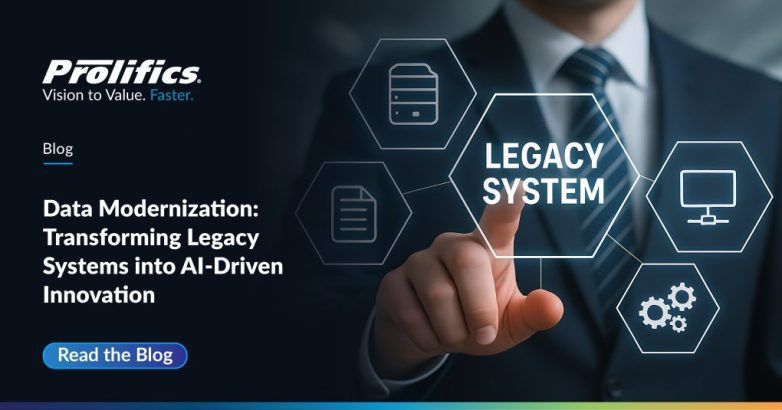
In today’s digital economy, data is the most valuable asset an enterprise owns. Yet many organizations struggle to unlock its full potential because their data ecosystems are built on outdated architectures, fragmented systems, and legacy platforms, highlighting the urgent need for enterprise data modernization.
As businesses accelerate AI adoption, the question is no longer whether to modernize data but how quickly organizations can transform their data foundations to support AI-driven innovation through data modernization for AI.
This is where data modernization strategy becomes the critical first step in any successful data and AI strategy.
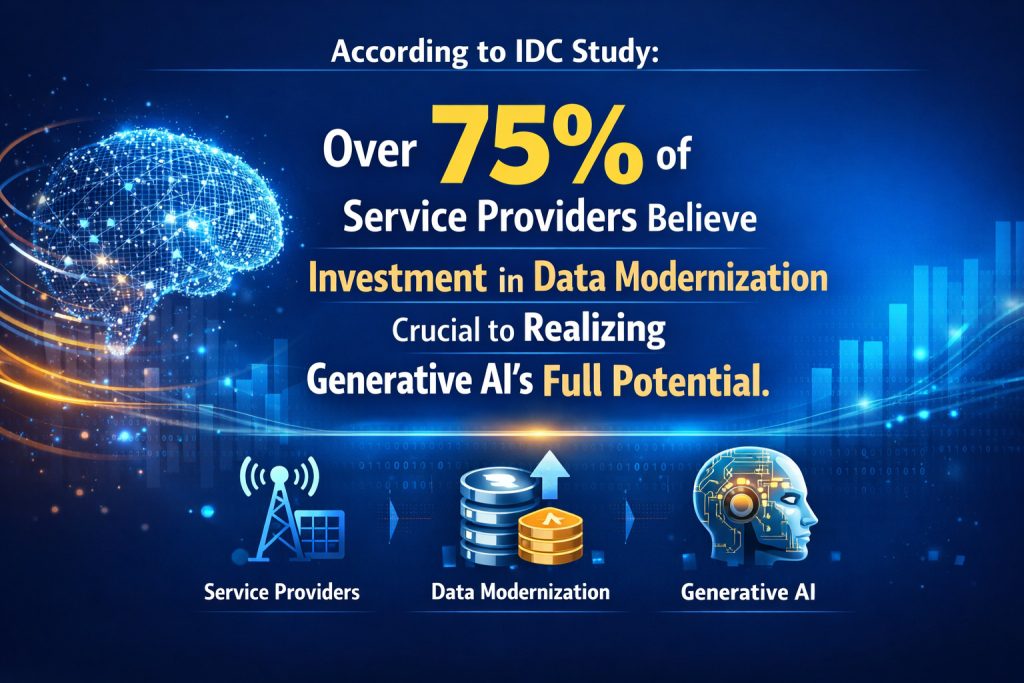
As per the IDC white paper, “AI Demands More: Enterprises Are Playing Catch-Up on Mission-Critical Data Modernization,” highlights the critical need for robust data modernization efforts to fully leverage the power of hybrid AI.
At Prolifics, we help enterprises modernize their data ecosystems to unlock real-time insights, scalable analytics, and AI-powered decision-making through cloud data modernization and advanced capabilities. With more than four decades of experience in digital transformation, our engineering-first approach enables organizations to build future-ready modern data architecture that drive measurable business outcomes.
Why Data Modernization Matters for AI Success
Artificial intelligence promises smarter decisions, predictive insights, and automation at scale. However, without a modern data foundation, AI initiatives often fail to deliver meaningful results, making data modernization for AI essential.
Data modernization refers to the transformation of legacy data infrastructure, tools, and processes into agile, cloud-ready environments that enable analytics and AI workloads as part of a strong data modernization strategy.
Many enterprises still operate with:
• Legacy data warehouses
• Siloed departmental databases
• Slow batch-processing pipelines
• Inconsistent data governance frameworks
These outdated systems make it difficult to deliver high-quality, trusted data to AI models and analytics platforms, limiting the benefits of data modernization for AI initiatives.
Modernizing data infrastructure allows organizations to integrate data sources, improve quality, strengthen governance, and make information accessible across the enterprise.
Without modernization, organizations risk building AI initiatives on unstable and fragmented data foundations, emphasizing the importance of enterprise data modernization.
The Hidden Challenges of Legacy Data Ecosystems
Legacy data environments were designed for a different era, when data volumes were smaller, analytics was slower, and AI-driven decision-making was not yet mainstream.
Today’s organizations face several major challenges with traditional data architectures.
Data Silos and Fragmentation
Over time, enterprises accumulate data across multiple systems and business units. This results in data silos that prevent a unified view of information and limit enterprise-wide insights.
Without integrated data ecosystems, organizations struggle to achieve a single source of truth, leading to inconsistent analytics and slower decision-making, making legacy system modernization a necessity.
Performance and Scalability Limitations
Legacy systems often rely on batch processing and on-premise infrastructure, which cannot scale to support modern analytics workloads.
As data volumes grow exponentially, these systems become costly to maintain and difficult to expand, reinforcing the need for cloud data modernization.
Poor Data Accessibility
When data is locked inside legacy systems, business teams cannot access insights quickly. Instead, they rely heavily on IT teams for reporting and analytics.
This dependency slows innovation and delays critical business decisions.
Governance and Compliance Risks
Modern enterprises operate in highly regulated environments. Legacy systems frequently lack the governance, security, and monitoring capabilities required to manage sensitive data effectively.
Data modernization introduces automated governance, security controls, and compliance frameworks to ensure safe and reliable data usage as part of a strong data modernization strategy.
The Strategic Benefits of Data Modernization
Data modernization is not just about upgrading infrastructure. It is about transforming data into a strategic business asset through data modernization for AI.
Organizations that modernize their data ecosystems unlock several key advantages.
Faster Insights and Better Decision-Making
Modern data architectures support real-time analytics and AI-driven insights, allowing organizations to respond faster to market changes and operational risks.
Machine learning algorithms can analyze vast datasets and uncover patterns that would be impossible to detect manually.
Improved Operational Efficiency
Automated data pipelines reduce manual data processing tasks and eliminate redundant workflows.
This enables organizations to streamline operations while freeing up resources to focus on innovation and strategic initiatives.
Scalable Infrastructure
Cloud-native architectures provide elastic scalability, allowing enterprises to process large volumes of data without costly infrastructure upgrades.
This ensures organizations can support advanced analytics, AI workloads, and future growth through modern data architecture.
Stronger Data Governance and Security
Modern data ecosystems incorporate automated governance frameworks, encryption, and role-based access controls to protect sensitive information and ensure regulatory compliance.
Key Components of a Modern Data Architecture
A successful data modernization strategy requires more than migrating data to the cloud. It involves building a holistic data ecosystem that supports analytics, AI, and innovation, often leveraging data lakes and lakehouse architecture.
Key components include:
Unified Data Platforms
Modern enterprises consolidate structured, semi-structured, and unstructured data into unified platforms such as data lakes or lakehouse architectures.
These platforms eliminate silos and enable consistent analytics across the organization.
Cloud-Native Infrastructure
Cloud environments provide the scalability and flexibility needed to process large volumes of data while supporting AI and advanced analytics workloads, strengthening AI-ready data infrastructure.
Data Governance and Observability
Strong governance ensures that data is accurate, secure, and compliant. Modern platforms also provide metadata management, lineage tracking, and data quality monitoring.
AI-Ready Data Pipelines
Automated pipelines enable seamless ingestion, transformation, and processing of data for analytics and machine learning models.
Together, these capabilities create a robust foundation for enterprise AI initiatives and support data modernization roadmap for enterprises.
Building an Effective Data Modernization Roadmap
Organizations that succeed with data modernization follow a structured approach.
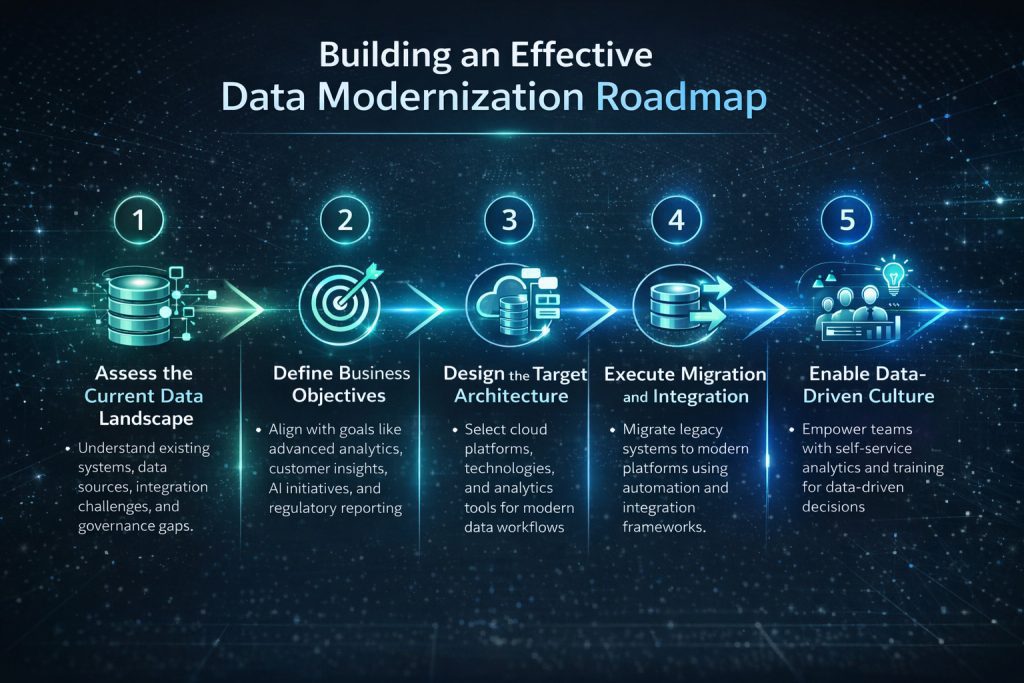
Step 1: Assess the Current Data Landscape
The first step is understanding the existing data ecosystem, identifying legacy systems, data sources, integration challenges, and governance gaps as part of how to modernize legacy data systems for AI.
Step 2: Define Business Objectives
Data modernization must align with clear business goals, such as:
• Enabling advanced analytics
• Improving customer insights
• Supporting AI initiatives
• Enhancing regulatory reporting
Step 3: Design the Target Architecture
This phase focuses on selecting the right technologies, cloud platforms, and analytics tools to support modern data workflows.
Step 4: Execute Migration and Integration
Legacy data systems are gradually migrated to modern platforms while maintaining operational continuity.
Automation tools and integration frameworks can accelerate migration and reduce risk, especially in legacy system modernization.
Step 5: Enable Data-Driven Culture
Technology alone is not enough. Organizations must empower teams with self-service analytics tools and training to encourage data-driven decision-making.
How Prolifics Accelerates Data Modernization
At Prolifics, we combine deep data engineering expertise, AI innovation, and cloud platform partnerships to help organizations modernize their data ecosystems through enterprise data modernization.
Our capabilities include:
- Data platform modernization across AWS, Google Cloud, Salesforce, and other leading technologies
- Enterprise data integration and governance frameworks
- Advanced analytics and AI enablement
- Migration of legacy data environments to cloud-native architectures
With over 45 years of digital transformation experience, Prolifics helps organizations move beyond fragmented data infrastructures and build scalable, AI-ready data platforms aligned with data modernization for AI.
Our approach focuses on delivering measurable business outcomes, from improved operational efficiency to enhanced decision intelligence.
The Future of Enterprise Data and AI
The future of business will be driven by data-powered intelligence.
Organizations that modernize their data ecosystems today will gain the agility to adopt emerging technologies such as:
• Generative AI
• Predictive analytics
• Autonomous decision systems
• Real-time data intelligence
Data modernization ensures enterprises are not just storing data but turning it into a powerful engine for innovation and growth through cloud data modernization.
Unlock the Full Value of Your Data with Prolifics
Modernizing data is the foundation of every successful digital transformation initiative.
With the right strategy, architecture, and technology partners, organizations can transform legacy data environments into agile, AI-ready ecosystems that deliver real business value using a robust data modernization strategy.
At Prolifics, we help enterprises modernize data, accelerate AI adoption, and unlock insights that drive smarter decisions and long-term growth.
Ready to start your data modernization journey?
Connect with Prolifics to build a scalable data foundation that powers your AI future.