A leading global investment bank partnered with Prolifics to modernize its contact center intelligence and unlock the full value of its data. With over 1.5 million calls each month and vast volumes of unstructured transcripts, the bank needed a smarter, scalable solution to deliver accurate, compliant, and context-aware responses.
Prolifics introduced a graph-powered RAG architecture that transformed fragmented data into an intelligent, connected knowledge system. By combining graph databases, vector embeddings, and hybrid search, the solution enabled deeper understanding of customer queries and relationships across accounts, products, and interactions.
Business challenges faced by the client:
Struggled to extract insights from massive volumes of unstructured contact center data.
Faced inefficiencies in delivering accurate real-time responses to agents across fragmented data sources.
Traditional RAG systems failed to capture complex relationships and maintain context across conversations.
Scalability issues arose as the knowledge base expanded, impacting performance and accuracy.
Needed explainable, compliant AI responses to meet strict regulatory and audit requirements.
Key solution capabilities include:
Graph-based reasoning to understand complex data relationships
Hybrid search combining lexical, semantic, and contextual retrieval
Dynamic knowledge graph built from transcripts and enterprise data
Reduced AI hallucination with traceable and verifiable responses
Real-time insights embedded within agent workflows
Business impact delivered:
Improved accuracy and consistency in AI-driven responses
Enhanced explainability to support compliance and governance
Faster resolution times and increased agent productivity
Personalized customer interactions based on contextual insights
AI in mental health care is reshaping how healthcare systems diagnose, monitor, and treat mental health conditions, bringing faster detection, personalized treatment, and scalable digital tools to patients who need them most. As adoption accelerates in 2026, understanding both the transformative benefits and the real risks of artificial intelligence in mental health is essential for every healthcare organization, clinician, and patient navigating this rapidly evolving landscape.
AI in mental health care helps detect conditions earlier, personalize treatment plans, and improve access through digital tools like chatbots and predictive analytics. By integrating AI into healthcare systems, providers can reduce costs, enhance patient outcomes, and scale mental health services efficiently while maintaining clinical oversight.
What Is AI in Mental Health Care?
The role of AI in mental health care is the use of artificial intelligence technologies, including machine learning, natural language processing, and predictive analytics, to diagnose, monitor, and treat mental health conditions. AI supports clinicians, enhances patient engagement, and enables scalable mental health solutions across healthcare systems.
In 2026, these systems are no longer experimental. They are embedded into clinical workflows, electronic health records (EHRs), and patient-facing platforms across the globe.
The global AI in mental health market is projected to reach $17.9 billion by 2030, growing at a CAGR of 24.3% (Grand View Research, 2025).
What Is the Role of AI in Mental Health Care Today?
The role of AI in mental health care today is to enhance clinical decision-making and expand access to treatment.
AI systems analyze patient data, including medical history, behavioral patterns, and even speech or text inputs, to identify early signs of mental health conditions such as depression, anxiety, and PTSD. This allows healthcare providers to intervene earlier and improve outcomes.
AI-powered tools are also being used in digital therapeutics. Chatbots and virtual assistants provide 24/7 support, helping patients manage symptoms between clinical visits. This is especially valuable in regions facing shortages of mental health professionals.
According to the World Health Organization, nearly 1 in 8 people globally live with a mental disorder, yet access to care remains critically limited. AI helps bridge this gap by scaling support without increasing clinical workload.
By the end of 2025, over 60% of large health systems in the US had deployed at least one AI-powered mental health screening tool (AHA Annual Survey, 2025).
Why Is AI Important for Improving Mental Health Outcomes?
AI is important for improving mental health outcomes because it enables earlier detection, continuous monitoring, and personalized treatment. Traditional mental health care often relies on self-reporting and periodic clinical assessments, which can delay diagnosis. AI improves this by continuously analyzing data from multiple sources, including wearable devices and digital interactions, to identify changes in behavior or mood.
For example, natural language processing (NLP) can detect patterns in speech or text that indicate depression or anxiety. This allows clinicians to act before conditions worsen.
AI also supports personalized care. Machine learning models can recommend treatment plans based on patient history, improving effectiveness and reducing trial-and-error approaches.
IBM research highlights that AI-driven analytics can significantly improve clinical decision-making by identifying patterns that are not visible to human clinicians.
NLP-based AI tools identified depressive language patterns with 87% accuracy in a 2024 Stanford Medicine study, compared to 72% for standard screenings.
How Does AI Improve Access to Mental Health Services?
AI improves access to mental health services by enabling scalable, always-available digital care solutions.
One of the biggest challenges in mental health care is the shortage of trained professionals. AI addresses this by providing tools such as chatbots, virtual therapists, and self-guided treatment platforms.
These tools offer immediate support, helping patients manage symptoms like anxiety or stress without waiting for appointments. While they do not replace clinicians, they extend the reach of mental health services.
In rural or underserved areas, AI-powered platforms can connect patients with care resources that would otherwise be unavailable. This supports broader healthcare accessibility and digital transformation goals.
Forrester reports that digital health solutions, including AI-driven tools, are key to scaling healthcare delivery and improving patient engagement.
By integrating AI into healthcare systems, organizations can provide continuous support while optimizing clinician time.
Telehealth and AI therapy apps saw a 38% year-over-year growth in user adoption globally through Q1 2026 (Rock Health, 2026).
What Are the Risks of Using AI in Mental Health Care?
The risks of using AI in mental health care include data privacy concerns, bias in algorithms, and a lack of human oversight. Mental health data is highly sensitive, making data governance and security critical. Without proper safeguards, there is a risk of data misuse or breaches.
Bias is another challenge. If AI models are trained on limited or non-diverse datasets, they may produce inaccurate or unfair outcomes for certain populations. This can lead to misdiagnosis or unequal care.
Additionally, over-reliance on AI tools without clinical validation can reduce the quality of care. AI should support clinicians, not replace them.
Gartner emphasizes that responsible AI governance is essential to ensure trust, accuracy, and compliance in healthcare applications.
Organizations must implement strong governance frameworks, ethical guidelines, and human oversight to mitigate these risks.
In 2025, 41% of AI-related healthcare incidents reported to the FDA involved bias or inequitable outcomes in diagnostic algorithms (FDA AI/ML Action Plan Report, 2025).
How Can Healthcare Organizations Implement AI Effectively?
Healthcare organizations can implement AI in mental health care effectively by following a structured, governance-first approach:
Identify high-impact use cases such as early diagnosis or patient monitoring
Validate AI models with clinical oversight and real-world evidence
Train staff and clinicians on AI tools, limitations, and ethical use
Monitor outcomes using patient and operational metrics continuously
Scale successful solutions across the organization with built-in feedback loops
This approach ensures AI delivers measurable improvements in both patient outcomes and operational efficiency without compromising clinical integrity.
Traditional Mental Health Care vs. AI-Driven Care: Key Differences
The following comparison highlights how AI enhances rather than replaces traditional mental health care:
Aspect
Traditional Care
AI-Driven Care
Diagnosis
Periodic assessments
Continuous, data-driven insights
Access
Limited by clinician availability
24/7 digital support
Treatment
Standardized approaches
Personalized AI recommendations
Monitoring
Infrequent check-ins
Real-time behavioral tracking
Scalability
Limited by workforce
Highly scalable, low marginal cost
Cost
High per-patient expense
Reduced via automation & AI triage
Real-World Examples of AI in Mental Health Care
AI is already delivering measurable impact in mental health care across the industry. A healthcare provider used AI-driven predictive analytics to identify patients at risk of depression, enabling earlier intervention and reducing hospitalization rates. Another example includes AI chatbots that support cognitive behavioral therapy (CBT), helping patients manage anxiety and stress in between sessions.
These use cases demonstrate how AI improves both clinical outcomes and operational efficiency when integrated into healthcare systems.
According to McKinsey, AI adoption in healthcare could generate up to $100 billion annually by improving diagnostics and treatment outcomes.
A 2025 pilot at Cleveland Clinic found that AI-assisted mental health triage reduced average wait times from 18 days to 6 days for non-urgent psychiatric consultations.
Conclusion
The role of AI in mental health care is to enhance outcomes, expand access, and support clinicians through data-driven insights. When implemented with strong governance and thoughtful integration, artificial intelligence enables a more proactive, personalized, and scalable approach to mental health treatment.
As we move further into 2026, organizations that strategically adopt AI in mental health care with rigorous clinical oversight, ethical frameworks, and patient-centered design will be positioned to transform mental health services and improve patient experiences at scale.
At Prolifics, we help healthcare organizations integrate AI into their systems to drive better outcomes and scalable innovation. Ready to explore AI-driven mental health solutions for your organization? Connect with our experts today.
Frequently Asked Questions
How is AI used in mental health diagnosis?
AI in mental health diagnosis works by analyzing patient data including speech patterns, behavioral signals, text-based inputs, and medical history to detect early signs of conditions such as depression, anxiety, PTSD, and bipolar disorder. Natural language processing models can identify linguistic markers of mental distress with clinical-grade accuracy, enabling faster and more consistent diagnoses compared to traditional methods reliant solely on clinician assessment.
Can AI replace therapists in mental health care?
No – AI cannot replace therapists in mental health care. While AI therapy tools and mental health chatbots provide valuable supplemental support, they lack the empathetic reasoning, contextual judgment, and therapeutic relationship that human clinicians provide. AI is most effective as a force multiplier for therapists: handling triage, monitoring, and administrative tasks so clinicians can focus on complex, high-value care.
Is AI in mental health care safe and secure for patients?
AI in mental health care can be safe when backed by strong data governance, HIPAA/GDPR compliance, clinical validation, and transparent algorithmic auditing. The key risks including data breaches, biased outputs, and over-reliance are manageable with the right governance frameworks. Patients should always confirm that any AI mental health platform they use is clinically validated and operates under healthcare data protection standards.
What are the biggest benefits of AI in mental health care ?
The biggest benefits of AI in mental health care in 2026 include: early and accurate detection of mental health conditions using predictive analytics; 24/7 access to digital mental health support via AI chatbots; personalized treatment recommendations powered by machine learning; real-time monitoring through wearables and behavioral data; and reduced operational costs enabling healthcare systems to scale mental health services to underserved populations.
How do healthcare organizations measure the success of AI in mental health programs?
Healthcare organizations measure AI success in mental health through a combination of clinical and operational KPIs: reduced time to diagnosis, lower hospitalization and readmission rates, patient engagement scores, clinician efficiency gains, cost per patient served, and equity metrics tracking outcomes across diverse patient populations. In 2026, responsible AI governance also requires organizations to monitor for algorithmic bias and adverse event rates as part of ongoing model validation.
Today’s students expect personalized, seamless, and digital-first learning experiences. At the same time, institutions are under pressure to modernize legacy systems, improve outcomes, and optimize costs. Prolifics empowers universities to stay ahead by building connected, data-driven ecosystems that transform how education is delivered and experienced.
We partner with higher education institutions to create future-ready campuses that enable:
Personalized student journeys tailored to individual needs
Real-time insights for smarter decision-making
Scalable, cloud-first infrastructure
Seamless digital experiences across the campus
What We Deliver
AI-Powered Personalized Learning
Move beyond one-size-fits-all education with intelligent, adaptive solutions:
Customized learning paths for every student
AI-driven recommendations and virtual assistants
Predictive analytics to improve retention and success
Cloud Transformation for Modern Campuses
Modernize your IT landscape for agility and resilience:
Migration from legacy systems to scalable cloud platforms
Hybrid and digital classroom enablement
Secure, always-on infrastructure
Data-Driven Insights & Integration
Turn data into actionable intelligence while breaking silos:
Unified student data platforms and real-time dashboards
Strong governance and compliance frameworks
Seamless LMS, ERP, CRM integration and automated workflows
Proven Impact
With Prolifics, institutions achieve measurable results:
Faster digital transformation and cloud adoption
Improved student engagement and satisfaction
Streamlined operations with reduced costs
Scalable platforms for long-term growth
Why Prolifics?
Deep expertise. Proven results. Student-centric outcomes.
Expertise in AI, GenAI, and automation
Strong cloud partnerships (AWS, Google Cloud, Salesforce)
Proven integration frameworks and accelerators
Outcome-driven, student-centric approach
The Future of Higher Education Starts Now
From modernizing legacy infrastructure to deploying AI-powered learning ecosystems, Prolifics helps institutions lead, not follow the future of education.
As organisations accelerate AI adoption, agentic analytics is emerging as a defining new paradigm in enterprise intelligence. These systems operate autonomously, make real-time decisions, and continuously learn – but they also depend heavily on strong data governance to deliver reliable, scalable, and trustworthy outcomes.
The stakes are significant. According to Gartner, by 2027, organisations that fail to establish formal data governance for AI agents will experience 3x more AI project failures than those with structured governance frameworks in place. Forrester Research reinforces this finding, reporting that 73% of enterprise AI initiatives cite poor data quality and lack of governance as the primary barriers to scaling autonomous AI systems beyond the pilot stage. For CIOs and data leaders building agentic AI strategies in 2026, governance is not an afterthought – it is the foundation.
At Prolifics, we help enterprises put the right governance and data foundations in place so they can scale agentic analytics with confidence and control.
Rise of Agentic Analytics in Modern Enterprises
Agentic analytics refers to AI systems that act independently to analyse data, generate insights, and execute decisions with minimal human intervention. These systems are increasingly being deployed across enterprise environments to improve operational efficiency, customer experience, and strategic decision-making across industries including financial services, healthcare, retail, insurance, and the public sector.
However, the effectiveness of these systems is directly tied to the quality, consistency, and trustworthiness of the data they consume. This is where data governance for AI agents plays a pivotal role.
Without a well-defined governance framework, agentic systems risk operating on incomplete, inconsistent, or biased datasets which can lead to inaccurate outputs, regulatory exposure, and material business risk. IBM’s Data & AI Index found that enterprises without structured AI data governance experience 45% higher model error rates and 2.1x longer time-to-production for AI initiatives compared to governance-mature peers.
Why Data Governance is Critical for Agentic AI
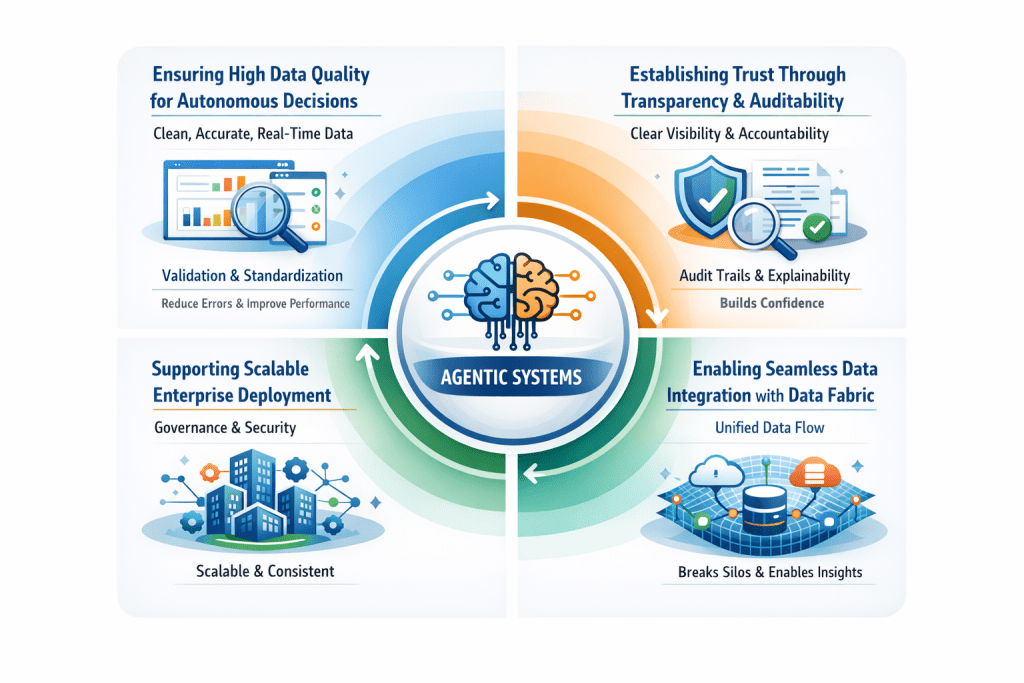
Data governance for AI agents is essential because agentic systems rely on accurate, trusted data to make autonomous decisions at scale. Without proper oversight, poor agentic AI data quality leads to flawed outcomes and reduced system reliability.
Governance also ensures transparency and accountability, helping organizations understand, audit, and trust AI-driven actions. Finally, it enables secure, scalable deployment by maintaining consistency, compliance, and control across complex data ecosystems.
1. Ensuring High Agentic AI Data Quality for Autonomous Decisions
Agentic systems rely heavily on real-time data inputs. Poor data quality can directly impact decision accuracy and system performance with consequences that compound autonomously at machine speed. Implementing strong agentic AI data quality practices ensures that data is clean, validated, and standardized before it is consumed by AI agents.
This involves implementing key data quality practices such as:
Data validation pipelines
Schema enforcement
Real-time anomaly detection
By maintaining high-quality datasets, organizations can significantly reduce the risk of erroneous insights and prevent autonomous systems from amplifying data errors into business-critical decisions.
2. Establishing Trust Through AI Data Lineage and Auditability
Trust is a fundamental requirement for enterprise AI adoption. Stakeholders including regulators, board members, and end users must understand how autonomous decisions are made, especially in regulated industries such as banking, insurance, and healthcare.
This is where AI data lineage and auditability become essential. A robust enterprise data governance framework provides full visibility into:
Data origins and transformations
Model inputs and outputs
Decision-making workflows and agent actions
With clear lineage and audit trails, organizations can ensure regulatory compliance, improve accountability, and build trusted AI analytics systems that withstand internal and external scrutiny. Forrester notes that organizations with mature AI data lineage capabilities are 2.4x more likely to pass regulatory audits on first submission a critical advantage in financial services and healthcare environments.
3. Supporting Scalable Agentic AI Enterprise Deployment
Scaling agentic analytics across an enterprise requires consistency in data policies, access controls, and governance standards. A strong enterprise data governance strategy ensures that all AI systems operate within a unified framework regardless of business unit, geography, or cloud environment.
This enables:
Secure data access across departments and platforms
Standardised data definitions and metadata management
Controlled data sharing across systems and partner ecosystems
Such consistency is critical for successful agentic AI enterprise deployment, especially in large, distributed organizations managing hundreds of concurrent AI agents across production environments.
4. Enabling Seamless Data Integration with Data Fabric for AI Analytics
Modern enterprises deal with highly fragmented data ecosystems spanning on-premises databases, cloud data warehouses, SaaS applications, and real-time streaming sources. To support agentic analytics, organizations must integrate data across these sources in real time without sacrificing governance or security.
A data fabric for AI analytics provides a unified architecture that connects disparate data systems, enabling seamless data access and orchestration for AI agents at scale.
When combined with governance, data fabric ensures:
Consistent data policies across hybrid and multi-cloud environments
Real-time data availability for AI agents making time-sensitive decisions
Reduced data silos and improved interoperability across the enterprise
This creates a strong, resilient foundation for scalable and efficient agentic analytics workflows.
Real-World Use Case: Agentic Analytics Governance in Financial Services
A leading U.S. regional bank deploying agentic analytics across its credit risk, fraud detection, and customer personalisation functions partnered with Prolifics to implement a formal data governance for AI agents framework before scaling its autonomous AI programs.
Key outcomes delivered within 9 months:
AI model error rates reduced by 41% – directly attributable to validated, schema-enforced data pipelines replacing ad hoc data feeds
Regulatory audit preparation time cut by 58% – enabled by end-to-end AI data lineage covering 100% of agentic decision workflows
Time-to-production for new AI agents reduced from 14 weeks to 5 weeks, achieved through standardised metadata management and reusable governance policies
Data silo count reduced from 23 to 6 – through data fabric for AI analytics implementation connecting core banking, CRM, and real-time transaction systems
Zero data compliance violations recorded in the 9 months following governance framework deployment versus 4 regulatory findings in the prior year
This deployment validated the direct relationship between enterprise data governance maturity and agentic AI enterprise deployment success in a high-stakes, regulated operating environment.
Core Elements of an Agentic Analytics Governance Framework
To fully support agentic systems, organizations should build governance around five foundational pillars:
Metadata management and data cataloging – ensuring discoverability and consistency across AI data assets
Role-based access control and data security – protecting sensitive data consumed by autonomous agents
AI data lineage tracking and audit mechanisms – full visibility into agent decision pathways
Compliance with regulatory standards and policies – GDPR, CCPA, HIPAA, and sector-specific AI regulations
Each of these components contributes to a resilient governance structure that enables reliable, trustworthy AI operations at enterprise scale.
The Business Impact of Strong Data Governance for Agentic AI
Organizations that invest in data governance for AI agents gain a measurable competitive advantage in deploying agentic analytics at scale. According to Gartner, governance-mature enterprises deploy AI initiatives 2.6x faster than peers and report significantly higher business stakeholder confidence in AI-driven recommendations.
The tangible business benefits include:
Faster and more accurate autonomous decision-making
Increased trust in trusted AI analytics systems across stakeholder groups
Reduced operational and regulatory compliance risks
Improved scalability of AI initiatives – from pilot to enterprise-wide deployment
Ultimately, strong governance transforms AI from an experimental capability into a strategic business asset one that compounds value as agentic systems learn and expand across the organization.
Conclusion: Data Governance Is the Backbone of Agentic Analytics
Agentic analytics represents the next evolution of enterprise AI offering unprecedented levels of autonomy, speed, and intelligence. However, its success depends entirely on the strength of the underlying data foundation.
By prioritizing agentic analytics data governance, organizations can ensure high agentic AI data quality, transparency, scalability, and trust. In doing so, they not only enable effective autonomous AI systems they position themselves for long-term competitive advantage in an increasingly data-driven world.
A well-defined enterprise data governance strategy is not just a support function. It is the backbone of reliable, scalable, and trusted AI analytics in the era of agentic intelligence. With Prolifics as your partner, that foundation is built right from day one.
Frequently Asked Questions
What is agentic analytics?
Agentic analytics refers to AI systems that autonomously analyse data, generate insights, and execute decisions with minimal human intervention across enterprise environments.
Why is data governance important for agentic AI?
Without data governance, agentic AI systems operate on incomplete or biased data – leading to flawed decisions, compliance risks, and unreliable business outcomes.
How does data quality impact agentic AI performance?
Poor data quality directly reduces decision accuracy in agentic systems. Validation pipelines, schema enforcement, and real-time anomaly detection are essential to maintain reliable AI outputs.
What is AI data lineage and why does it matter?
AI data lineage tracks the origin, transformation, and flow of data through AI systems – providing the auditability and transparency required for regulatory compliance and stakeholder trust.
Databricks has unveiled Genie Code, a breakthrough AI agent designed to transform how enterprises build, manage, and scale data workflows, marking a significant leap toward what the company calls “agentic engineering” for data.
Announced as part of Databricks’ expanding Data Intelligence Platform, Genie Code moves beyond traditional AI-assisted development into a new paradigm where AI agents autonomously plan, execute, and maintain production-grade data systems.
Unlike conventional coding assistants that merely suggest snippets, Genie Code can independently build data pipelines, debug failures, deploy dashboards, and manage production environments, dramatically reducing the manual burden on data teams.
From Assistance to Autonomous Data Work
The launch reflects a broader industry shift toward AI agents acting as digital coworkers. Analysts predict that enterprise AI is rapidly evolving from experimentation to real-world execution, with agents becoming embedded in everyday workflows.
Genie Code embodies this shift by enabling multi-step reasoning and execution, allowing it to handle complex workflows end-to-end while keeping humans in control of critical decisions.
This evolution is particularly significant for data engineering, where fragmented tools, manual orchestration, and governance challenges have long slowed innovation.
Why Genie Code Matters for Enterprises
For organizations striving to operationalize AI at scale, Genie Code addresses three persistent challenges:
Speed to Production: Transforms ideas into production-ready workflows without lengthy development cycles
Operational Efficiency: Automates repetitive engineering tasks, freeing teams to focus on innovation
Reliability at Scale: Improves success rates of data workflows significantly compared to traditional AI tools
By embedding intelligence directly into workflows, enterprises can accelerate analytics, machine learning, and generative AI initiatives.
Governance at the Core: Powered by Unity Catalog
A key differentiator of Genie Code is its deep integration with Unity Catalog, Databricks’ unified governance layer.
This ensures that every automated action, whether building pipelines or deploying models, operates within defined access controls, lineage, and compliance frameworks.
As enterprises increasingly prioritize trusted data for AI, this governance-first approach becomes critical. Industry experts emphasize that unlocking AI value depends on secure, governed data environments that can be accessed and trusted across the organization.
Prolifics Perspective: Turning Innovation into Enterprise Value
While Genie Code introduces a powerful new capability, organizations still face the challenge of adoption, integration, and governance alignment.
This is where Prolifics and Databricks play a pivotal role.
Accelerating Implementation: Helping enterprises integrate Genie Code into existing data ecosystems
Governance-First Enablement: Ensuring Unity Catalog is structured for secure, scalable AI adoption
Operationalizing Agentic AI: Bridging the gap between experimentation and production-ready workflows
By combining Databricks’ innovation with Prolifics’ enterprise expertise, organizations can move faster from AI ambition to measurable outcomes.
The Future: Agentic AI Becomes the New Standard
Genie Code signals a turning point in enterprise data strategy, where AI is no longer just a tool but an active participant in building and managing data systems.
As agentic AI continues to mature, organizations that invest early in governed, automated, and intelligent data workflows will be best positioned to lead in the AI-driven economy.
With innovations like Genie Code, and the right strategic partners, enterprises are now closer than ever to achieving truly autonomous, AI-powered data operations.
SAP ECC to S/4HANA migration is the process of transitioning an enterprise’s legacy ERP system to SAP’s next-generation in-memory platform – S/4HANA – to enable real-time analytics, intelligent automation, and cloud readiness. With SAP ECC mainstream support ending in 2027, organizations must act now. Prolifics addresses the most common barrier to conversion, fragmented, unqualified opportunities, through a standardized migration framework that improves pipeline quality and forecast accuracy.
As enterprises accelerate toward intelligent, cloud-enabled ERP systems, the transition from SAP ECC to SAP S/4HANA is no longer optional. It is inevitable. With SAP ECC mainstream support ending by 2027, organizations must act decisively to modernize their ERP landscape and remain competitive.
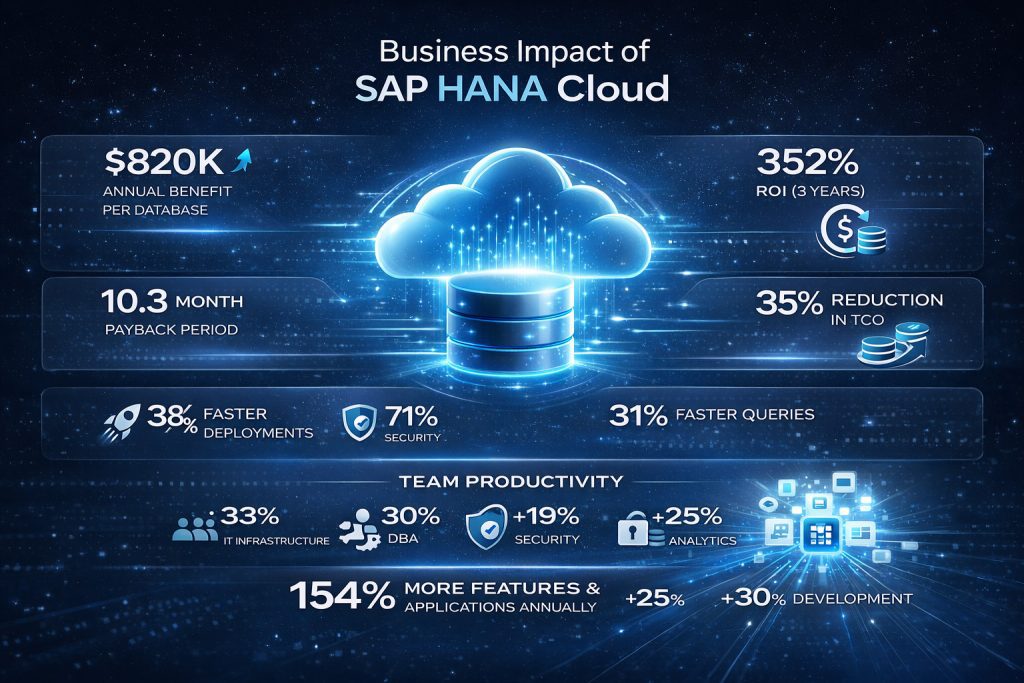
The business case is compelling. A recent IDC study highlights the strong impact of SAP HANA Cloud adoption: organizations report an average annual benefit of $820,000 per database, a 352% ROI over three years, and a 35% reduction in total cost of ownership within the same period. Payback is achieved in just 10.3 months. Operationally, businesses see 38% faster database deployments, a 71% reduction in unplanned downtime, 31% faster query speeds, and productivity gains across IT infrastructure (33%), DBA (30%), security (19%), analytics (25%), and development teams (30%) – resulting in 154% more features and applications delivered annually.
However, many SAP transformation initiatives still suffer from fragmented approaches, inconsistent deal qualification, and misaligned expectations. This directly impacts pipeline quality, forecast accuracy, and opportunity prioritization.
To address this, Prolifics has introduced a standardized migration framework for all SAP ECC-to-S/4HANA opportunities – a strategic, structured approach that ensures focus on the right deals, accelerates conversions, and delivers measurable business value.
Why Is SAP ECC to S/4HANA Migration a Strategic Imperative?
SAP S/4HANA is not just an upgrade. It represents a fundamental shift in how enterprises operate. Built on an in-memory database, it enables real-time analytics, simplified data models, and intelligent automation, allowing organizations to make faster, more informed decisions.
Operational efficiency: Simplified data structures reduce complexity and costs
Cloud readiness: Flexible deployment across hybrid and cloud environments
Innovation enablement: Integration with AI, ML, and IoT capabilities
Organizations are increasingly viewing S/4HANA migration as a business transformation initiative, not just a technical project. Those still on SAP ECC face a hard deadline: after 2027, SAP will no longer provide security patches, regulatory updates, or innovation enhancements for ECC systems.
Why Do SAP S/4HANA Migration Deals Often Fail to Convert?
Despite the urgency, many organisations struggle to move from evaluation to execution. A significant portion remain stuck in the assessment phase due to complexity and uncertainty.
Common challenges include:
1. Lack of Strategic Alignment
Many organisations treat migration as a technical upgrade rather than a business transformation, leading to unclear objectives and weak business cases.
2. Customization Complexity
Years of ECC customisations create technical debt that complicates migration. This requires redesign or elimination of legacy processes.
3. Data Quality Issues
Legacy systems often contain redundant or outdated data, making data cleansing and transformation a major bottleneck.
4. Change Management Barriers
User adoption challenges arise due to new interfaces such as SAP Fiori and redesigned workflows.
5. Inconsistent Opportunity Qualification
From a sales perspective, many deals lack standardised assessment criteria, leading to overestimated timelines, misaligned expectations, and poor forecasting accuracy.
What Is the Prolifics SAP S/4HANA Migration Framework?
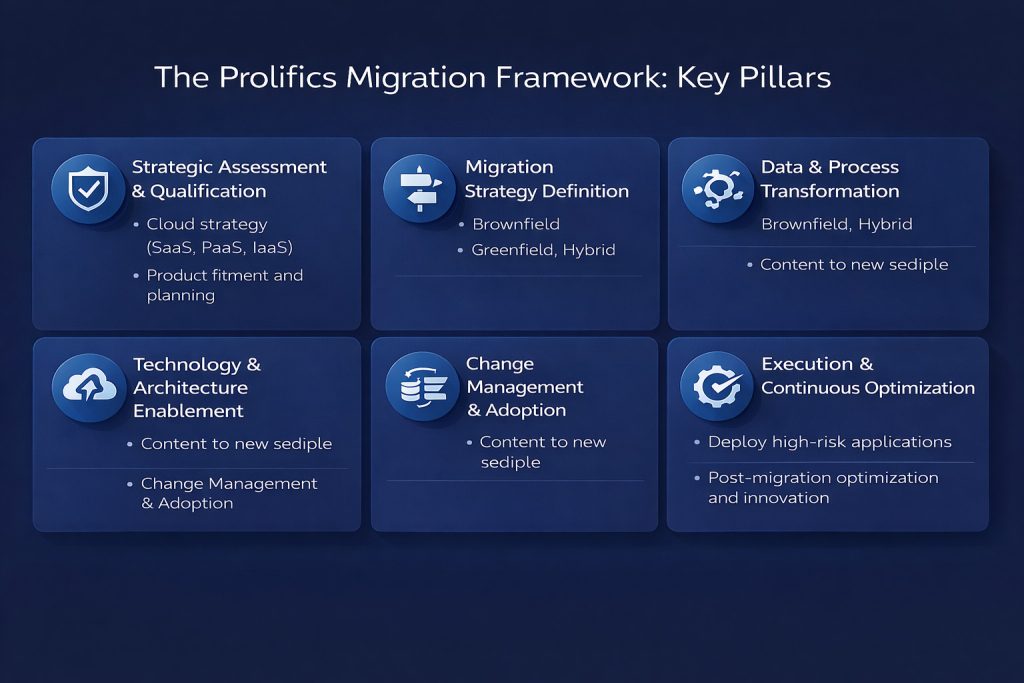
The Prolifics Migration Framework is a standardized, six-pillar approach to SAP ECC-to-S/4HANA transformation designed to improve pipeline quality, enhance forecast predictability, ensure focus on high-value winnable opportunities, and align technical feasibility with business outcomes.
Every opportunity is approached with precision, consistency, and strategic intent from initial assessment through post-migration optimization.
How Does the Prolifics Migration Framework Work? (Step-by-Step)
Pillar 1: Strategic Assessment and Deal Qualification
Every opportunity begins with a structured discovery process:
SAP Readiness Check and system analysis
Business case validation – ROI, TCO, and value drivers
Stakeholder alignment across IT and business leadership
This ensures that only qualified, transformation-ready opportunities enter the pipeline.
Pillar 2: Migration Strategy Definition
Choosing the right SAP S/4HANA migration strategy is critical. Prolifics helps clients evaluate three proven paths:
Migration Path
Approach
Best For
Brownfield (System Conversion)
Converts existing ECC system in-place
Faster timelines; preserves existing investments
Greenfield (New Implementation)
Builds S/4HANA from scratch
Complete transformation; clean core from day one
Hybrid (Selective Data Transition)
Migrates selected data/units
Balances speed, innovation, and risk
Each approach is aligned with business priorities, risk tolerance, and transformation goals.
Pillar 3: Data and Process Transformation
Migration is not just about moving data it is about optimizing it. Prolifics focuses on:
Data cleansing and harmonisation
Process standardisation
Elimination of redundant customisations
This aligns with the S/4HANA clean core strategy, ensuring long-term scalability and innovation readiness.
Pillar 4: Technology and Architecture Enablement
Prolifics designs a future-ready architecture that supports:
Cloud-first or hybrid deployment models
Integration with AI, analytics, and automation tools
Scalable infrastructure for evolving business needs
This ensures organisations fully leverage S/4HANA capabilities beyond migration.
Pillar 5: Change Management and Adoption
Successful transformation depends on people, not just technology. Prolifics’ approach includes:
User training and enablement
Role-based experience design using SAP Fiori
Organisational change management
This minimizes disruption and accelerates adoption.
Pillar 6: Execution and Continuous Optimisation
Prolifics delivers end-to-end execution with:
Agile implementation methodologies
Risk mitigation strategies
Post-migration optimisation and innovation
The goal is not just go-live. It is continuous value realization.
How Does Standardisation Improve Pipeline Quality and Forecast Accuracy?
Introducing a standardised SAP digital transformation consulting framework transforms how SAP opportunities are managed across every stage of the sales cycle.
Better deal qualification: Only high-potential opportunities with clear business value enter the pipeline.
Improved forecast accuracy: Standardised assessment reduces uncertainty in timelines, costs, and resource requirements.
Faster deal cycles: Predefined frameworks accelerate decision-making and reduce delays.
Higher win rates: Clients gain confidence through structured, value-driven proposals.
Stronger customer relationships: A consultative, strategic approach positions Prolifics as a trusted transformation partner.
Which Organizations Should Prioritise SAP ECC to S/4HANA Migration Now?
Not all SAP ECC customers are ready for migration. The Prolifics framework helps identify the right segments to pursue:
Organisations nearing ECC support deadlines (mainstream support ends 2027)
Enterprises actively seeking digital transformation
Businesses struggling with legacy system limitations and technical debt
Companies prioritising data-driven decision-making and real-time analytics
By focusing on these segments, Prolifics ensures maximum impact and ROI for every engagement.
What Lies Beyond SAP S/4HANA Migration?
SAP S/4HANA migration is the foundation. The real value lies beyond it. Organizations that approach ERP modernization services strategically can unlock:
Intelligent automation
Predictive analytics
Enhanced customer experiences
Scalable, future-ready operations
Migration becomes a launchpad for enterprise innovation not just a compliance exercise.
Why Prolifics for SAP ECC to S/4HANA Migration?
At Prolifics, we combine deep SAP expertise, proven migration methodologies, industry-specific insights, and end-to-end ERP modernization capabilities. Our standardized migration framework ensures that every SAP digital transformation opportunity is approached with precision, consistency, and strategic intent, whether you are in finance, healthcare, retail, or the public sector.
Conclusion
The shift from SAP ECC to S/4HANA is one of the most critical transformations enterprises will undertake this decade. With SAP ECC mainstream support ending in 2027, the window for strategic, structured migration is narrowing fast.
Success depends not just on execution; it begins with how opportunities are identified, qualified, and pursued. By introducing a standardized migration framework, Prolifics is redefining how SAP transformation deals are approached: improving pipeline quality, enhancing forecast accuracy, and ensuring focus on the right opportunities at every stage.
Planning your move from SAP ECC to S/4HANA? Explore how Prolifics’ standardized approach helps you win the right deals and deliver real transformation.
Frequently Asked Questions
When does SAP ECC support end?
SAP is ending mainstream support for SAP ECC in 2027. Optional extended support may be available through paid agreements, but organisations will no longer receive security patches, regulatory updates, or new innovation from SAP after that date.
What is the difference between brownfield and greenfield S/4HANA migration?
Brownfield (system conversion) migrates your existing ECC system to S/4HANA while retaining configurations and historical data faster and lower risk. Greenfield starts fresh, enabling complete process redesign and a clean core. A hybrid (selective data transition) approach combines both.
Why do many SAP migration deals fail to convert?
The most common reasons are lack of strategic alignment, customisation complexity, poor data quality, change management challenges, and inconsistent opportunity qualification. Prolifics’ standardised Migration Framework addresses all five by building a structured, assessment-led engagement from the start.
How long does an SAP ECC to S/4HANA migration take?
Migration timelines vary by organisation size, complexity, and chosen path. Brownfield conversions can take 12–18 months for mid-size enterprises; greenfield implementations may take 18–24 months or more. A structured migration framework significantly reduces timeline uncertainty.
SAP S/4HANA promises a modern digital core, real-time insights, and streamlined operations. But for many organizations, the journey to get there is far from smooth.
Industry research consistently shows that SAP S/4HANA migration challenges – not the platform itself – are the primary reason projects exceed timelines, blow past budgets, or fail to deliver expected value. According to Gartner, more than 55% of large ERP implementations run over budget, and SAP migrations are no exception.
The root cause is rarely SAP itself. It is the data pipelines behind the scenes.
“Poor data quality is one of the top three causes of ERP migration failure. Your pipelines don’t fail in S/4HANA – they expose what was already broken.”
It’s Not an SAP Problem, It’s a Data Pipeline Problem
Many organizations approach S/4HANA as a system upgrade. It is not. It is a business transformation powered by data. Every insight, report, and process depends on how data moves across systems – from extraction and transformation to validation and loading.
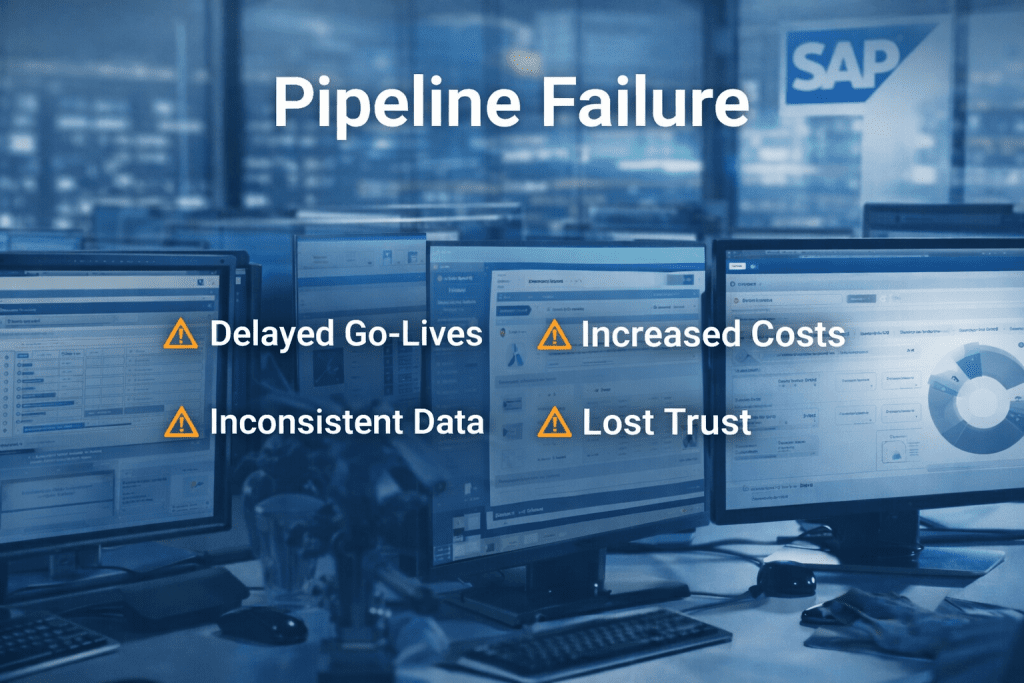
When pipelines are weak, everything downstream suffers. Understanding the most common SAP data pipeline failure reasons is the first step toward a successful migration.
Why SAP S/4HANA Pipelines Fail
The following seven failure patterns account for the vast majority of troubled S/4HANA implementations. Recognizing them early is one of the most important SAP data migration best practices you can adopt.
1. Dirty and Unstructured Data
Legacy systems often carry years of duplicate, inconsistent, and outdated records. S/4HANA’s simplified data model makes these issues visible immediately, leading to failed loads, reconciliation errors, and unreliable reporting. What felt manageable in ECC becomes a critical blocker in S/4HANA.
2. No Data Readiness Strategy
Many teams assume SAP’s native tools will handle data quality automatically. They won’t. Without a clear data preparation strategy defined before migration begins, pipelines become reactive, unstable, and impossible to scale. This is one of the most common – and most avoidable – SAP ECC to S/4HANA migration pitfalls.
3. Lack of Master Data Management
S/4HANA requires consistent, trusted data across the entire enterprise. Without a strong master data management (MDM) foundation, organizations struggle with conflicting customer records, siloed vendor data, and inconsistent product hierarchies. The result: broken processes in finance, supply chain, and procurement from day one.
4. Underestimating Transformation Complexity
Migration is not simply moving data from one system to another – it is transforming it. Converting legacy structures to align with S/4HANA’s Universal Journal or new material ledger model introduces complexity that most pipelines are not designed to handle without proper pre-planning.
5. Integration and Custom Code Challenges
Over time, SAP landscapes accumulate custom ABAP code and third-party integrations. Many of these do not translate cleanly into S/4HANA, creating bottlenecks, breaking data flows, and forcing expensive rework mid-migration.
6. Weak Governance and Ownership
When no one owns the data, pipelines fail. Without a defined SAP data governance framework – including data owners, stewards, quality standards, and accountability structures – data quality degrades and issues go unresolved. Governance is not optional; it is foundational.
7. Treating Migration as Just IT
S/4HANA is not a technical upgrade. It directly impacts business processes, decision-making, and regulatory compliance. Treating it as an IT-only initiative creates gaps that no pipeline can compensate for. Business stakeholders must be engaged from day one.
The Business Impact of Pipeline Failure
The consequences of weak pipelines are not just technical – they hit the bottom line directly.
Business Impact
Typical Result
Budget overruns
55–75% of migrations exceed planned budget (Gartner, 2023)
Timeline delays
Average S/4HANA migration runs 6–12 months over schedule
Unreliable reporting
Finance and supply chain reports become untrustworthy post go-live
Operational disruption
Order processing, invoicing, and procurement face critical errors
Compliance risk
Regulatory and audit exposure from inconsistent master data
These outcomes are avoidable. But they require addressing the root causes, not the symptoms.
How to Fix SAP S/4HANA Pipelines
Fixing SAP S/4HANA pipelines isn’t about a single tool or a single decision. It’s about building a strong, reliable data foundation that supports transformation at scale. Here is what that looks like in practice.
Start with Data, Not Technology
Most organizations begin with tools, platforms, or migration strategies. That’s backwards. One of the most critical SAP data migration best practices is to understand your data landscape before choosing technology. This means:
Profiling your data to identify duplicates, gaps, and inconsistencies
Standardizing formats across systems – customer names, addresses, financial identifiers
Validating data against business rules before it ever enters S/4HANA
If this step is skipped, pipelines become overloaded with errors. You are not just moving data. You are deciding which data deserves to move forward.
Establish Master Data Management
Without master data management for SAP S/4HANA, every system tells a slightly different version of the truth. MDM creates a centralized, governed view of critical business entities – customers, vendors, materials, and cost centers – across the enterprise.
Effective MDM for S/4HANA involves:
Defining golden records that act as the single source of truth for each business entity
Synchronizing data across ERP, CRM, SCM, and other enterprise systems
Implementing automated workflows to maintain data consistency after go-live
In S/4HANA, where finance, supply chain, and manufacturing processes are tightly integrated, inconsistent master data ripples across every function. Strong MDM ensures your pipelines don’t just move data – they move trusted data.
Strengthen Data Governance
Pipelines fail when data has no ownership. A robust SAP data governance framework provides the structure needed to maintain quality and accountability throughout the migration and beyond.
This includes:
Assigning data owners and stewards responsible for specific domains (finance, procurement, HR)
Defining clear standards for data entry, validation, enrichment, and usage
Implementing monitoring tools to continuously track and report on data quality KPIs
Governance is not a one-time effort. It is an ongoing discipline that ensures your pipelines remain stable long after go-live. Without it, even the best pipelines degrade over time.
Simplify Before Migration
One of the most overlooked SAP ECC to S/4HANA migration pitfalls is carrying unnecessary complexity into the new environment. Over years of operation, SAP systems accumulate unused custom code, redundant integrations, and legacy data that no longer serves any business purpose.
Simplification means:
Retiring obsolete processes and custom ABAP code
Consolidating third-party integrations and decommissioning redundant interfaces
Archiving or eliminating historical data that does not need to move forward
The goal is not just to migrate – it is to modernize
Test End-to-End
Many teams test components in isolation. But pipelines fail in the gaps between systems, not within them.
End-to-end testing ensures that data flows correctly from source systems through transformation layers into S/4HANA, that all transformations are accurate and complete, and that outputs match real business expectations – not just technical specifications. This includes running full pipeline simulations, performing reconciliation checks between legacy and S/4HANA systems, and executing parallel runs under realistic production conditions. If your testing does not mirror production, you are testing assumptions, not reality.
Adopt a Phased Approach
Big-bang migrations are high-risk and difficult to control. A phased migration approach allows organizations to move specific modules or data domains incrementally, identify and resolve issues before they cascade, and reduce downtime and business disruption. Each phase becomes a learning opportunity. This approach builds confidence across both IT and business teams while systematically reducing risk.
Align Business and IT
S/4HANA pipelines do not exist in isolation – they exist to support business processes. When IT and business teams are misaligned, data definitions conflict, validation rules become unclear, and project priorities diverge at critical moments.
True alignment means data reflects real business needs, pipelines support decision-making rather than just data movement, and change management is handled proactively – not reactively. Successful SAP S/4HANA implementations are not just technically sound. They are business-aware from the start.
Need a head start? Working with an experienced SAP S/4HANA implementation partner can significantly reduce migration risk by bringing proven frameworks, pre-built accelerators, and hands-on expertise to your project.
The Future: Intelligent Pipelines
As organizations mature their SAP data strategies, pipelines are evolving from static batch processes into intelligent, real-time systems.
The next generation of SAP S/4HANA data pipelines includes:
AI-driven validation that detects anomalies and data quality issues before they impact operations
Real-time monitoring dashboards that provide full visibility into pipeline health and performance
Automated remediation workflows that resolve common issues without manual intervention
This shift changes the focus entirely. It is no longer just about moving data from point A to point B. It is about ensuring that data is accurate, trusted, and ready to drive business decisions in real time.
Why This Matters Now
S/4HANA is not just about modernizing ERP. It is about enabling faster decisions, better business insights, and scalable growth. And none of that is possible without reliable, well-governed data pipelines. Organizations that invest in fixing their data foundation before and during migration consistently see faster go-lives, fewer post-migration issues, and significantly higher ROI from their S/4HANA investment.
How Prolifics Helps Organizations Get It Right
At Prolifics, we approach SAP S/4HANA migration challenges through a different lens. It is not just about moving to a new system – it is about building a data foundation that delivers long-term business value.
As a trusted SAP S/4HANA implementation partner, we help organizations:
Prepare, profile, and govern data before migration begins — not during
Modernize integration pipelines for real-time, scalable, and resilient data flow
Apply SAP data migration best practices to simplify complex landscapes and reduce technical debt
Implement master data management for SAP S/4HANA to establish trusted golden records across the enterprise
Build a SAP data governance framework that maintains data quality long after go-live
Align business and IT teams to drive true transformation, not just implementation
By combining deep expertise in data engineering, integration, automation, and AI-powered analytics, we ensure that S/4HANA is not just deployed – it is fully optimized.
Because when your pipelines work, everything works.
Frequently Asked Questions
What are the most common SAP S/4HANA migration challenges?
The most common challenges include poor data quality in legacy systems, lack of master data management, weak data governance, underestimated transformation complexity, and misalignment between IT and business teams. Together, these account for the majority of failed or delayed S/4HANA projects.
How does master data management improve SAP S/4HANA outcomes?
MDM creates a single source of truth for critical business entities like customers, vendors, and materials. This prevents conflicting records from entering S/4HANA, reduces reconciliation errors, and ensures that downstream processes in finance, procurement, and supply chain operate on trusted data from day one.
What is a SAP data governance framework?
A SAP data governance framework defines ownership, standards, and accountability for data across the enterprise. It includes assigning data stewards, setting data quality standards, monitoring compliance, and establishing processes to maintain quality after go-live. Without governance, even well-built pipelines degrade over time.
What is the difference between SAP ECC and S/4HANA migration complexity?
SAP ECC to S/4HANA migration is significantly more complex than a standard ECC upgrade. S/4HANA introduces a new data model, a simplified Universal Journal, and a redesigned material ledger. Custom code built for ECC often requires rewriting, and legacy integration patterns frequently need to be rebuilt from the ground up.
A large loan servicer had rules scattered everywhere: in Salesforce, SQL jobs, legacy systems. No single source of truth, lots of risk, and slow updates.
The real problem
Business rules hidden in code and third-party systems
Inconsistent rule execution across platforms
Manual updates that were fragile and error-prone
Hard to adapt to regulatory changes
What Prolifics did
Instead of rebuilding everything, we:
Used AI to extract hidden business rules from SQL and legacy logic
Validated those rules against real workflows
Converted them into Drools rule specifications
Built a centralized rule engine as a single source of truth
Basically, we turned chaos into something structured and manageable.
Why these matters
This wasn’t just a cleanup; it changed how they operate:
Faster updates to policies and repayment rules
More accurate and automated rule extraction
Clear visibility into how decisions are made
Reduced compliance and operational risk
The takeaway
You don’t always need to rip and replace legacy systems.
Sometimes the smarter move is: Use AI to unlock what’s already there, organize it, and make it work better.
SAP S/4HANA migration is no longer just a technical upgrade. It is a business-critical initiative for organizations preparing for the SAP 2027 deadline migration while building a future-ready digital foundation. Despite its importance, many enterprises struggle to identify the right SAP S/4HANA migration success factors from clear strategy to data readiness and aligned execution.
Organizations that succeed follow a structured approach grounded in SAP ECC to S/4HANA migration best practices, supported by a strong SAP S/4HANA migration checklist 2026 and a comprehensive S/4HANA migration readiness assessment.
How Prolifics Ensures SAP S/4HANA Migration Success
Successful SAP S/4HANA migration requires more than technical execution. It demands a strategic partner with proven expertise, structured methodologies, and a deep understanding of business transformation.
Prolifics combines industry knowledge, SAP expertise, and a value-driven approach to help organizations navigate complexity and achieve measurable outcomes.
Combines deep SAP expertise with industry-specific transformation and modernization experience.
Delivers structured migration frameworks aligned with SAP S/4HANA migration checklist 2026 standards.
Conducts comprehensive S/4HANA migration readiness assessment to reduce risks early.
Applies proven SAP ECC to S/4HANA migration best practices across complex enterprise environments.
Proactively identifies and mitigates SAP S/4HANA migration risks through strategic planning and execution.
Based on Prolifics expertise and real-world implementations, below are six proven signals that define successful SAP S/4HANA migration programs:
1. Business Leadership Owns the Migration Vision
A strong indicator of success is when SAP S/4HANA migration is owned by business leadership rather than being treated solely as an IT initiative.
High-performing organizations position migration as an enterprise-wide transformation. Leaders from finance, supply chain, operations, and sales actively shape priorities and outcomes.
Cross-functional alignment accelerates decision-making and reduces delays.
End-user adoption improves when teams understand the business value.
Success indicator: A clearly defined business case with executive sponsorship and KPIs aligned to efficiency, compliance, agility, or revenue growth.
2. A Purpose-Driven Migration Strategy Is Defined Early
Successful organizations do not approach migration with a one-size-fits-all mindset. They conduct a thorough S/4HANA migration readiness assessment to determine the most suitable approach.
This includes selecting between Greenfield, Brownfield, or selective data transition based on:
Legacy system complexity and existing custom code footprint across environments.
Data retention policies and historical relevance for business continuity requirements.
Planned business process transformation aligned with future operating model objectives.
Regulatory constraints, compliance requirements, and overall migration cost considerations.
Why this matters:
Prevents scope creep and reduces unexpected budget overruns during migration execution.
Aligns technical execution with clearly defined long-term business transformation goals.
Avoids limiting innovation potential caused by rushed and poorly planned decisions.
Success indicator: A well-documented strategy aligned with SAP ECC to S/4HANA migration best practices and approved by both business and IT stakeholders.
3. Data Readiness Is Built Into the Migration Roadmap
Data is the backbone of S/4HANA. Organizations that succeed prioritize data quality early, rather than treating it as a post-migration activity.
S/4HANA’s simplified data model and real-time analytics require clean, structured, and governed data.
Why early data readiness drives value:
Improves reporting accuracy and enhances overall system performance and efficiency.
Reduces reconciliation efforts across multiple business functions and operational teams.
Enables faster, more reliable, and data-driven business decision-making processes.
Success indicator: Data governance, cleansing, and archiving initiatives are embedded into the migration roadmap as part of the SAP S/4HANA migration checklist 2026.
4. Process Simplification Takes Priority Over Customization
Organizations that succeed focus on simplifying processes instead of replicating legacy complexity.
They adopt SAP standard processes wherever possible and limit customization to areas that provide true business differentiation.
Why this approach works:
Reduces technical debt while simplifying overall implementation complexity across systems.
Lowers long-term maintenance costs and reduces future upgrade-related expenses significantly.
Enables faster adoption of future SAP innovations and emerging enterprise capabilities.
Success indicator: A clear fit-to-standard approach backed by business justification rather than legacy preferences.
5. Change Management Is Embedded Across the Lifecycle
One of the most overlooked SAP S/4HANA migration risks is inadequate change management. Successful programs treat change enablement as a core workstream.
Effective change management includes:
Transparent and continuous communication across all stakeholders throughout the migration lifecycle.
Role-based training aligned closely with redesigned business processes and user responsibilities.
Super-user networks established to support adoption and enable effective knowledge transfer.
Structured feedback loops implemented during testing phases and deployment activities.
Why this is important:
Minimizes disruption and reduces productivity loss during and after system go-live.
Builds strong user confidence and significantly accelerates overall return on investment.
Ensures sustained adoption of new processes, systems, and digital workflows.
Success indicator: A formal change management strategy that starts early and continues beyond go-live.
6. The SAP Partner Brings Strategic Transformation Expertise
Leading organizations collaborate with partners who go beyond technical delivery and provide strategic guidance.
What differentiates strong partners:
Ability to challenge outdated processes, assumptions, and legacy operational practices effectively.
Proven accelerators aligned with SAP ECC to S/4HANA migration best practices.
Proactive risk identification, mitigation planning, and dependency management across program phases.
Continued support for optimization, innovation, and performance improvement after go-live.
Why this is important for your business:
Reduces rework, minimizes delays, and eliminates hidden costs across migration programs.
Strengthens decision-making capabilities during critical migration and transformation program phases.
Aligns implementation strategy with long-term business outcomes and enterprise transformation goals.
Success indicator: A partner that acts as a trusted advisor throughout the transformation journey.
Conclusion
Successful SAP S/4HANA migration programs follow clear and repeatable patterns. They are business-led, strategically aligned, data-driven, process-focused, and supported by strong change management and expert partners. As organizations approach the SAP 2027 deadline migration, applying a structured SAP S/4HANA migration checklist 2026 and conducting a thorough S/4HANA migration readiness assessment becomes essential.
With Prolifics expertise guiding transformation initiatives, organizations gain the strategic direction, technical depth, and industry insight needed to navigate complexity with confidence.
By recognizing these six proven SAP S/4HANA migration success factors, enterprises can reduce risk, accelerate transformation, and unlock the full value of SAP S/4HANA.
Snowflake introduced Cortex AI, a powerful solution that enables businesses to leverage advanced language models for a wide range of inference tasks without the need to provision GPUs or manage complex infrastructure. For more advanced use cases, it also supports GPU-powered containers for model training and serving.
Fully embedded within the Snowflake environment, Cortex AI operates using familiar tools like SQL and Python. This means organizations can easily generate text, analyze sentiment, translate languages, summarize information, and more, all from a single, unified platform.
Unlocking the Power of AI Right Where Your Data Lives
What makes Cortex AI revolutionary is its ability to bring AI to your data instead of moving data to AI systems. This eliminates latency, reduces risk, and ensures governance. With built-in access to models from OpenAI, Meta, Anthropic, and more, enterprises can seamlessly deploy AI-driven capabilities like summarization, sentiment analysis, translation, and predictive analytics using simple SQL queries.
Even non-technical users can leverage its power. Features like Cortex Analyst allow business users to ask questions in plain English and instantly receive insights, with no coding required. (Snowflake Docs)
Key Features That Drive Business Impact
Snowflake Cortex AI delivers a comprehensive suite of capabilities designed for modern enterprises:
Cortex AI Functions: Automate tasks like text summarization, classification, and translation using SQL
Cortex Agents: Build intelligent data agents that unify structured and unstructured data
Multimodal Data Processing: Analyze text, images, and audio in one unified platform
Fine-Tuning & Custom Models: Tailor AI models to your specific business needs
Secure AI Execution: Ensure data never leaves Snowflake’s governed environment
These capabilities empower organizations to build scalable AI applications faster, reduce operational complexity, and accelerate time-to-insight.
Real-World Impact Across Industries
From financial services to healthcare and retail, Cortex AI is transforming how organizations operate. Businesses are using it to analyze customer feedback, automate document processing, optimize marketing campaigns, and power conversational analytics.
By bridging the gap between structured and unstructured data, Cortex AI enables a 360-degree view of business intelligence, unlocking insights that were previously inaccessible.
Why Snowflake Cortex AI Needs the Right Partner
While Snowflake Cortex AI offers immense potential, successful implementation requires the right expertise. Data strategy, AI integration, governance, and scalability all play a critical role.
Partner with Prolifics to Accelerate Your AI Journey
Prolifics helps organizations unlock the full value of Snowflake Cortex AI by combining deep technical expertise with industry-specific insights. From strategy and implementation to optimization and scaling, Prolifics ensures your AI initiatives deliver measurable business outcomes.
Whether you are looking to build intelligent applications, modernize data platforms, or drive AI-led transformation, Prolifics is your trusted partner every step of the way.
Ready to turn your data into intelligent action? Partner with Prolifics today and lead your enterprise into the AI-first future.